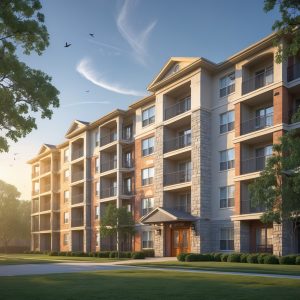

Cash buyers value distressed property using comparable sales, estimated repair costs, current occupancy or income, and title status, arriving at an offer that reflects the property’s condition today rather than a hypothetical repaired value. Location and local market demand also factor into the final number.
The rest of this page breaks down each of these factors individually, along with how to evaluate whether a specific offer is fair and grounded in real data.
The Core Factors Behind a Cash Offer
- Comparable sales. Recent sales of similar properties in similar condition nearby, adjusted for differences in size, layout and location.
- Repair costs. A conservative estimate of what it would cost to bring the property to a stabilized, marketable condition, based on current material and labor pricing.
- Occupancy and income. For rental or income-producing property, current rents, lease terms and vacancy are weighed alongside physical condition.
- Title status. Any liens, unpaid taxes or ownership complications are factored into both the offer and the closing timeline.
- Market demand. Overall demand for that property type and location within the current market.
How Repair Costs Are Actually Estimated
Repair cost estimates are typically built from a walkthrough or available photos and documentation, covering the major categories that affect a property’s value most.
- Roofing, siding and exterior envelope condition
- Plumbing, electrical and HVAC system status
- Foundation and structural concerns
- Interior finishes and general habitability
- Any fire, water, mold or pest damage
Why Cash Offers Are Not Just a Discounted Retail Price
Owners sometimes assume a cash offer is simply a retail price with an arbitrary percentage subtracted. A legitimate cash offer is built from the ground up using the factors above, not a flat discount applied to an online estimate.
- The offer reflects the property’s actual current condition, not a hypothetical repaired state
- Repair estimates are grounded in real material and labor costs, not guesswork
- Comparable sales are chosen for genuine similarity in condition and location
- A legitimate buyer should be able to explain how each factor shaped the final number
What to Ask When You Receive a Cash Offer
- What comparable sales were used, and how similar are they to your property
- How were repair costs estimated, and what do they include
- Does the offer reflect current market conditions in your specific area
- Is the buyer purchasing with their own funds, and can they prove it
Where We Buy
We Really Buy Properties is headquartered in Washington, DC and evaluates acquisition opportunities across nine states. Our 100-mile headquarters service radius covers Washington, DC and nearby markets in Maryland, Virginia, West Virginia, Pennsylvania and Delaware. We also acquire qualifying properties in Ohio, Kentucky, North Carolina and South Carolina through our extended acquisition network.
How This Compares to a Financed Offer
A financed retail offer might carry a higher headline number, but it also carries risk that a cash offer does not.
- A financed offer depends on the buyer qualifying for a loan, which is not guaranteed
- A financed offer often includes an appraisal contingency that can lower the price later
- A financed offer can take weeks or months longer to reach closing
- A cash offer is not subject to any of these contingencies once terms are agreed
How Location Affects a Cash Offer
Value varies considerably depending on where a property sits, even within the same region. A cash buyer’s valuation should reflect this rather than applying a single flat formula everywhere.
- Local comparable sales specific to that neighborhood or submarket
- Local repair and labor costs, which vary by region
- Local rental demand, for income-producing property
- Local market absorption rates, meaning how quickly similar properties typically sell
Why Two Cash Offers on the Same Property Might Differ
It is common for owners to receive different cash offers from different buyers on the same property. This does not necessarily mean one buyer is being dishonest. Buyers may weigh repair costs differently, use different comparable sales, or have different target returns for the type of property involved. Asking each buyer to explain their reasoning is the most reliable way to understand why offers differ and which one reflects the most accurate picture of your property’s actual current value.
Who This Service Is For
- Owners of distressed residential properties
- Landlords with difficult or underperforming rentals
- Owners of vacant houses or buildings
- Families handling inherited real estate
- Multifamily and apartment-building owners
- Commercial property owners
- Independent self-storage facility owners
- Investors liquidating individual properties or portfolios
- Owners facing major repair or deferred-maintenance costs
- Partnerships, estates, LLCs or businesses disposing of real estate
What We Provide
- Residential property purchases
- Multifamily property purchases
- Apartment-building purchases
- Commercial property purchases
- Self-storage facility purchases
- Distressed property evaluations
- As-is property purchase offers
- Vacant property purchases
- Inherited property purchases
- Investment-property and portfolio purchases
Frequently Asked Questions
Is a cash offer always lower than a retail listing price? Often, though not always. A cash offer reflects current condition and the certainty of a guaranteed close, while a retail price assumes repairs, marketing time and a successful financed closing.
Can I negotiate a cash offer? Yes. A cash offer is a starting point for discussion, not a final, non-negotiable number. You can ask questions, provide additional information, and discuss the terms.
Do cash buyers use the same valuation method for every property type? No. Residential, multifamily, commercial and self-storage properties are each evaluated using criteria relevant to that category, such as income analysis for rental property.
How do I know if a cash offer is fair? Ask how the offer was calculated and compare it against what you would realistically net through a repair-first, traditionally listed sale once all costs are considered.
How do I request a cash offer on my property? Submit the property address, property type, asking price, occupancy status, current condition and contact details through the website or by calling (202) 946-6108.
Related Topics
- Who Buys Distressed Properties?
- How Do I Sell a Distressed Property?
- Can I Sell a Distressed Property As-Is?
- How Quickly Can I Sell a Distressed Property?
- Distressed Real Estate Buyers
- We Buy Distressed Properties
- Cash Buyers for Distressed Properties
Related Resources
- Learn more about our acquisition team
- Browse our full FAQ page
- Review our acquisition process
- See the full list of properties we acquire
- Sell a distressed property directly
Request a Direct Property Offer
Call (202) 946-6108 or complete the online property form to discuss your property. Submit the address and basic property information to begin a confidential acquisition review, with no obligation to accept any offer we present.
Disclosure
We Really Buy Properties operates as a subsidiary of Orivant Capital Partners. We specialize in real estate investment and direct property acquisition, evaluating and purchasing residential, multifamily, commercial, mixed-use, and self-storage properties from owners.
Please note that we do not act as a licensed real estate brokerage, agent, attorney, accountant, lender, or financial advisor, except where explicitly stated in writing. All offers extended by We Really Buy Properties are contingent upon property review, due diligence, title verification, inspection, underwriting, and the negotiation of mutually agreeable purchase terms.
Submitting property details through our website does not establish a contractual obligation, create an agency relationship, or guarantee that an offer will be extended. We strongly encourage property owners to seek guidance from qualified legal, tax, financial, and real estate professionals prior to entering into any transaction.
All property transactions are subject to applicable federal, state, and local laws. The information provided on this website is intended for general informational purposes only and should not be interpreted as legal, tax, investment, or financial advice.
Home | About Us | Sell A Property | Our Process | FAQs | Contact Us